



 Written by admin
A recent study has exposed just how much personal information popular mobile browsers are collecting without users realizing it.
The findings should concern anyone who values their online privacy.
Researchers from Surfshark analyzed 15 popular mobile browsers and found three that stand out as the biggest data collectors. Yandex Browser leads the pack, gathering 25 different types of user data. Microsoft Edge follows with 20 data types, and Google Chrome collects 19.
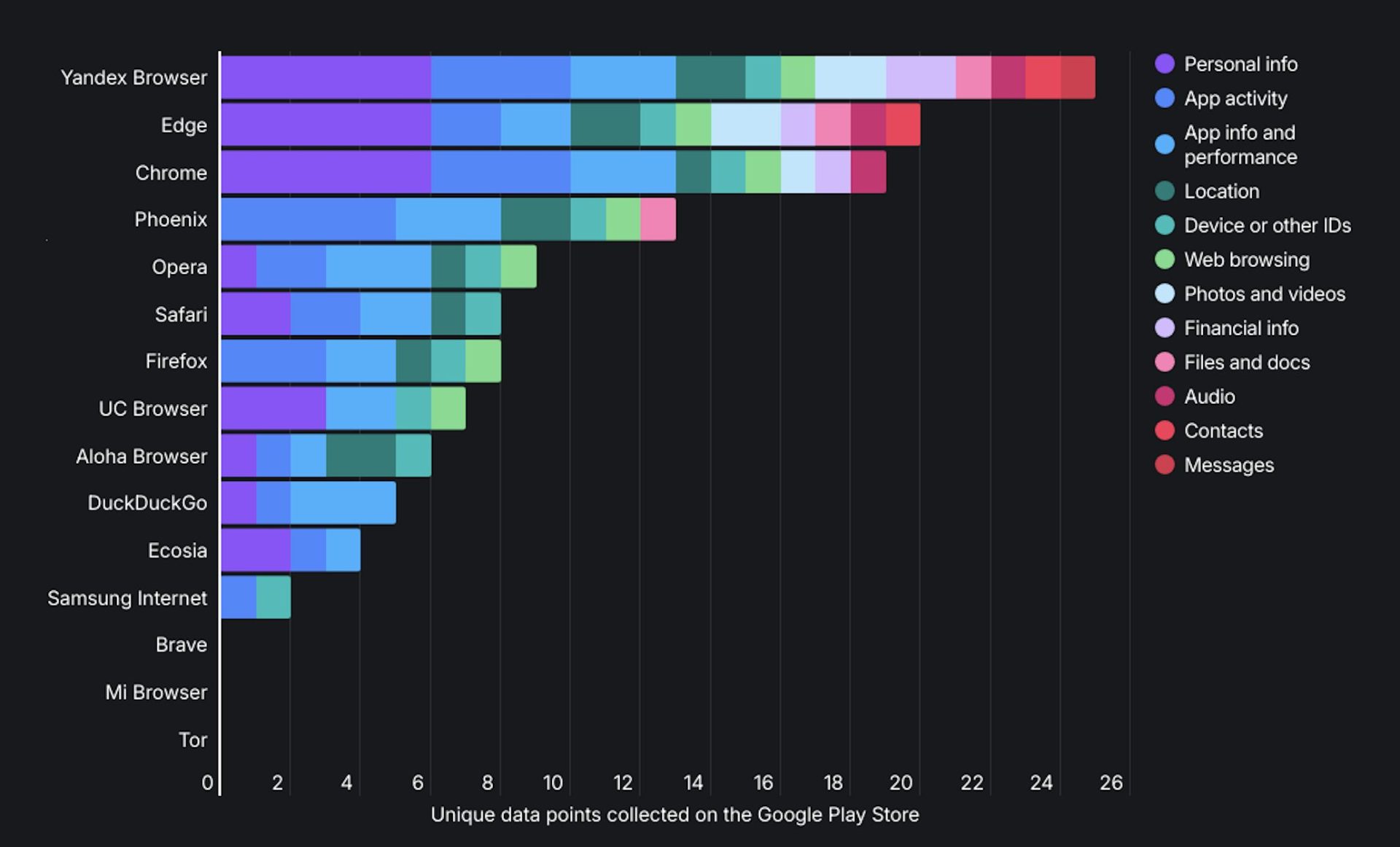
Here’s what makes this alarming: these browsers don’t just track your web history. They collect your home address, real-time location, purchase records, and financial information.
Yandex goes even further by collecting in-app messages, meaning your private chats could be harvested.
Five browsers also share your data with third parties. Phoenix shares device IDs, app interactions, and crash logs with outside companies.
Microsoft Edge shares your precise location and user IDs. Aloha does the same with location data. Opera and Yandex round out the list of browsers selling you out to unknown parties.
The study found browsers use collected data for seven main purposes. Advertising and marketing ranked high, with Yandex using seven different data types for this purpose alone. Phoenix, Edge, and Opera also mine user information for ads.
Analytics was another major reason cited. Eleven browsers collect data to track how you interact with their apps. Personalization followed, with eight browsers using your information to customize content recommendations.
This data allows companies to build detailed profiles predicting your behavior. They can show different prices to different users, target specific ads, and make assumptions about your health, finances, and political views.
This is no different than streaming platforms (Amazon and Roku), AI companies (OpenAI), or free VPNs selling your data.
Not all browsers treat users like products. Brave, Tor, and Mi Browser claim to collect zero user data according to their Google Play Store disclosures.
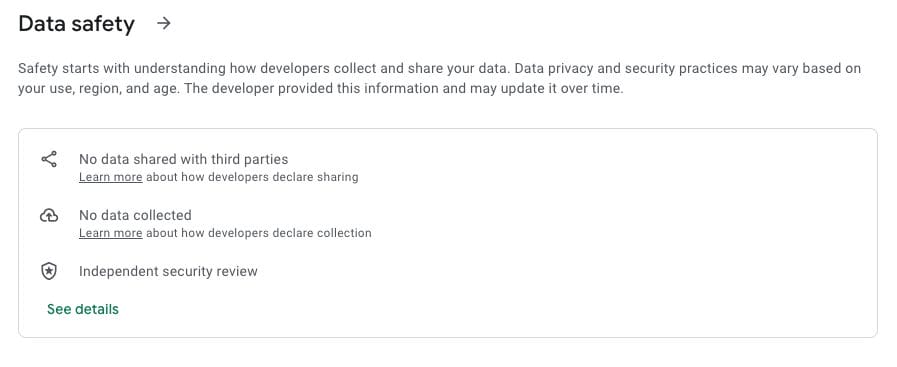
Samsung Internet, Ecosia, and DuckDuckGo collect minimal information, limited to things like crash logs.
Chrome dominates with 68.5% global market share, followed by Safari at 22%. This means most mobile users are using browsers that collect significant amounts of personal data.
Review your browser’s permissions and disable access to location, contacts, and files unless absolutely necessary.
Consider switching to privacy-focused browsers like Brave or alternative search engines like DuckDuckGo. Using a VPN adds another layer of protection by masking your IP address and encrypting traffic.
Keep your browser updated since patches often include security fixes. Check whether your personal information has been exposed using data leak monitoring tools.
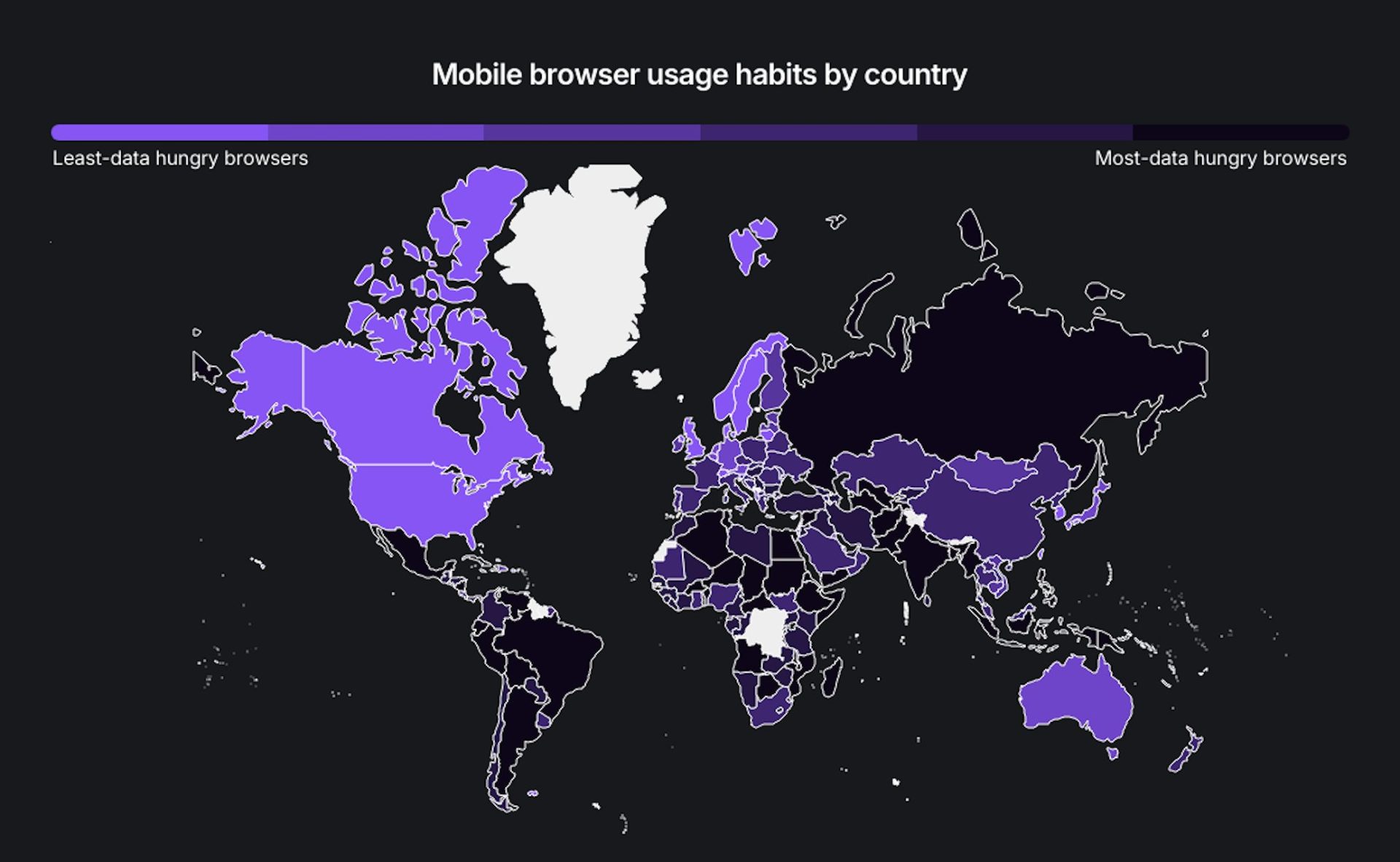
The browser market has become a data harvesting operation disguised as a free service. When an app costs nothing, you’re paying with your privacy instead of money. Users deserve to know exactly what information leaves their devices and where it ends up.
Your online activity is monitored by your ISP, app/addon/IPTV devs, government, and all websites.
🔒 Become anonymous while streaming & downloading with Surfshark VPN
Save 87% with 24-Month Plan + Get 3 FREE Months
Use on Unlimited Devices & Share 1 Account with Entire Family
CLAIM DEAL HERE
For more details on this story, refer to the official research from the team at Surfshark.
We want to know your thoughts. What do you think about this story? Let us know in the comment section below!
Be sure to stay up-to-date with the latest streaming news, reviews, tips, and more by following the TROYPOINT Advisor with updates weekly.
This page includes affiliate links where TROYPOINT may receive a commission at no extra cost to you. Many times, visitors will receive a discount due to the special arrangements made for our fans. Learn more on my Affiliate Disclaimer page.



© IPTVSub is Proudly Owned by win-design