


 Written by admin
The FCC just banned all new consumer routers built overseas from entering the U.S. market, citing serious national security threats.
On March 23, the agency added every foreign-produced router to its Covered List, which blocks upcoming models from receiving authorization. Without that approval, these devices can’t be imported or sold in America.
A White House-led interagency panel determined that these devices create “unacceptable risks to national security.”
Federal officials pointed to recent cyberattacks, including the Volt, Flax, and Salt Typhoon campaigns, where hackers exploited home networking equipment to infiltrate critical U.S. infrastructure.
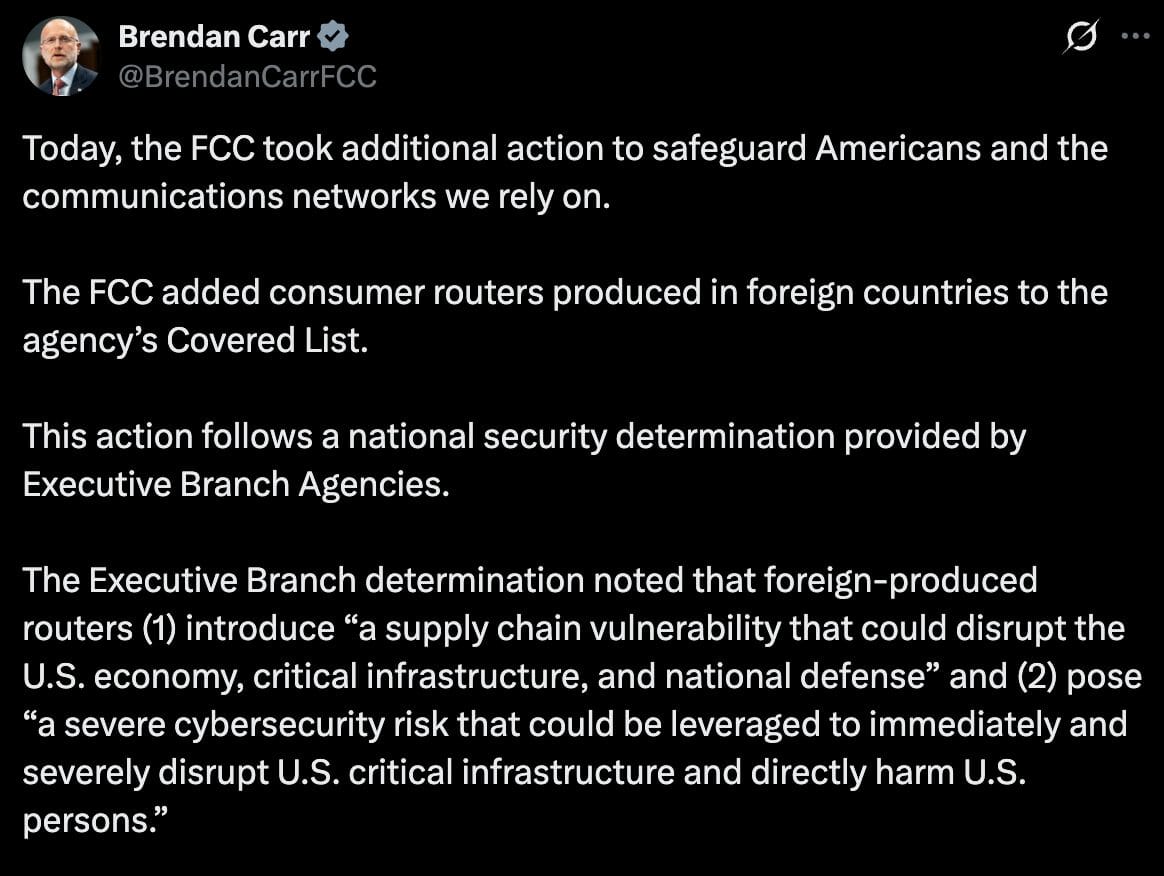
FCC chairman Brendan Carr stated the following on social media:
“Today, the FCC took additional action to safeguard Americans and the communications networks we rely on. The FCC added consumer routers produced in foreign countries to the agency’s Covered List. This action follows a national security determination provided by Executive Branch Agencies.”
Here’s the good news: if you already own a router, nothing changes. Your current device will keep working, and retailers can still sell models that were authorized before this restriction took effect. Firmware and security updates will continue as normal for now.
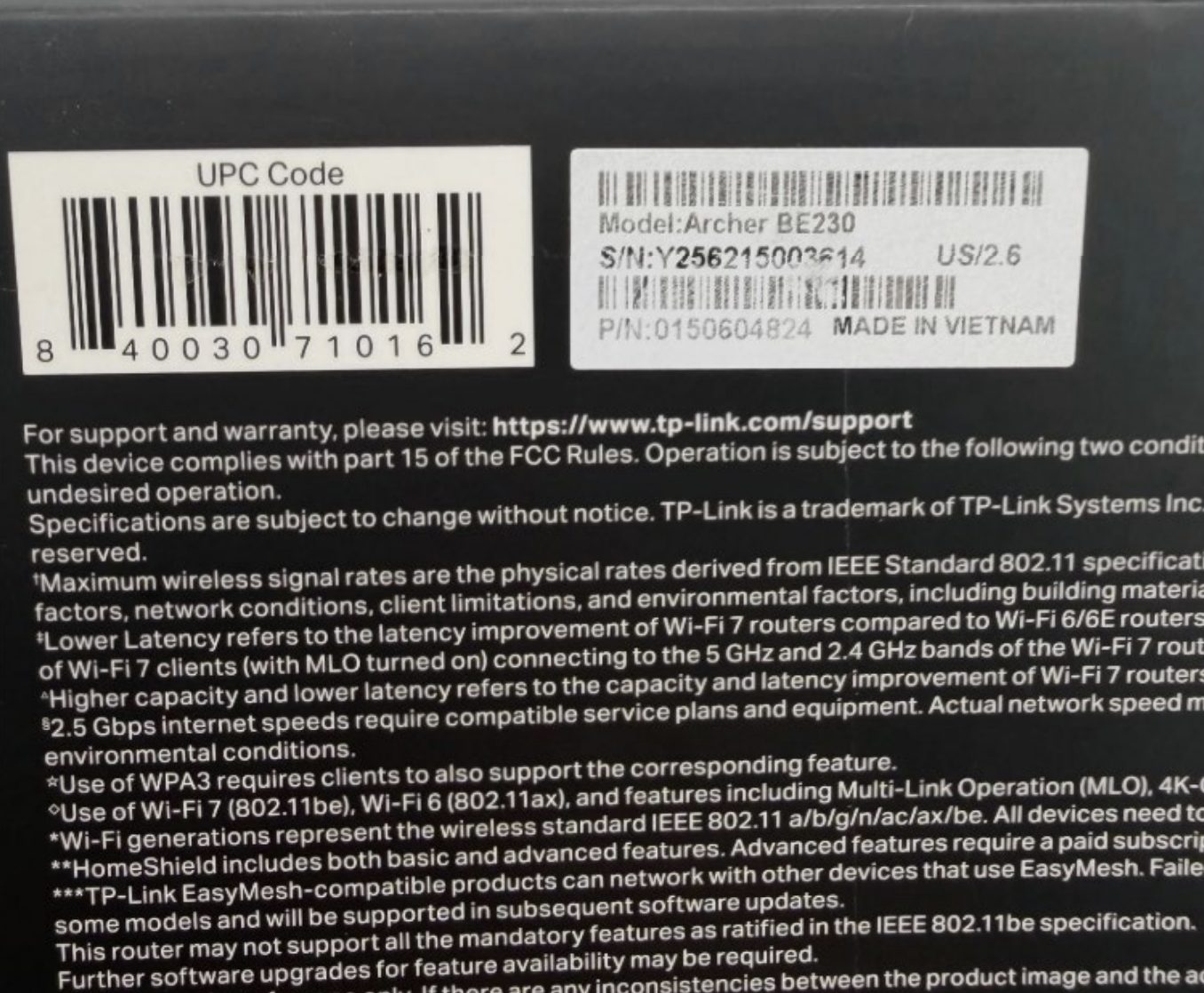
The bad news? Almost every major brand manufactures hardware overseas. TP-Link, Asus, D-Link, Netgear, Linksys, and even Amazon’s Eero all build their products in countries like China, Taiwan, Vietnam, and Thailand. SpaceX’s Starlink is one of the few exceptions, producing its newer routers in Texas.
This creates a real problem for shoppers down the road. Next-gen models, including Wi-Fi 8 and updated Wi-Fi 7 hardware, may never reach American shelves unless companies shift production domestically or obtain special clearance.
We suggest viewing the FCC’s FAQs page regarding these recent router updates.
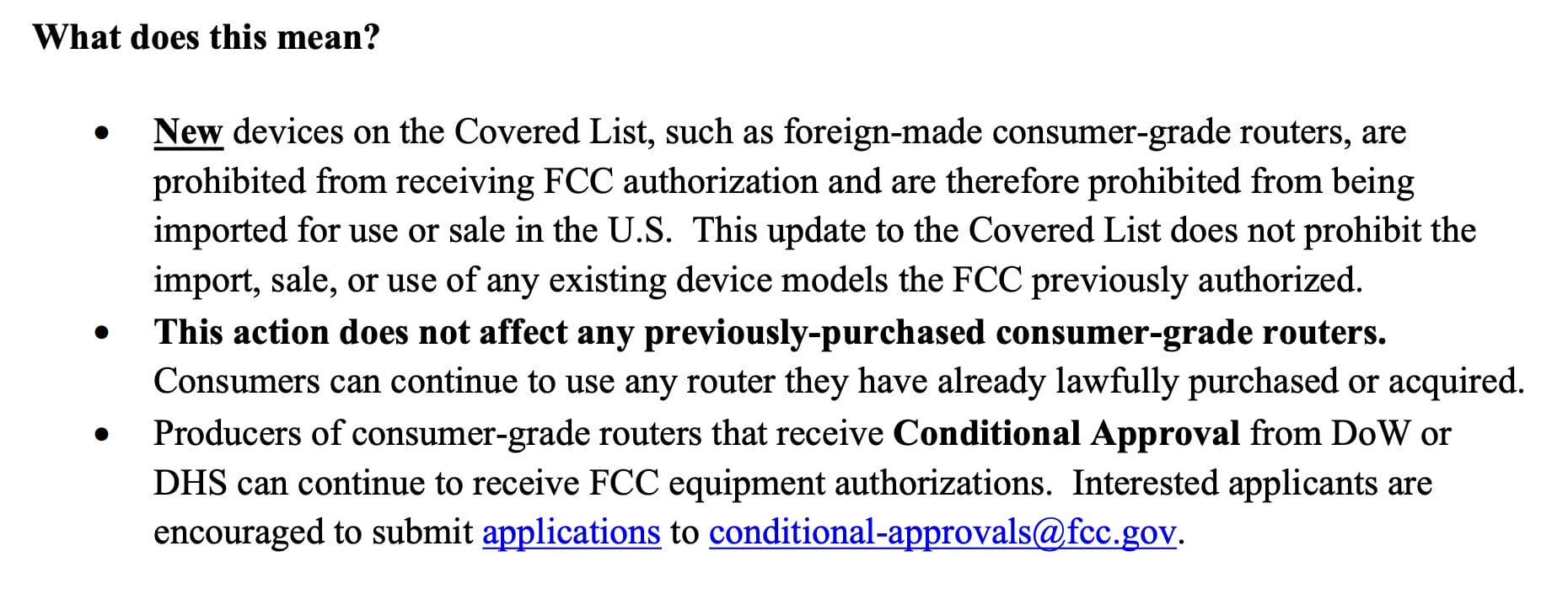
Manufacturers aren’t completely shut out. The FCC allows brands to apply for “Conditional Approval” through either the Department of War or Homeland Security. To qualify, a company must disclose its full supply chain, ownership structure, and present a plan to relocate production stateside.
That approval process will take time. Testing and certification alone can stretch over several months. Smaller brands may decide the hassle isn’t worth it and pull out of the American market entirely.
This action follows a similar playbook to the FCC’s restriction on overseas drones and comes after Texas Attorney General Ken Paxton filed suit against TP-Link, alleging Chinese hacking vulnerabilities.
The FCC’s router restriction is a massive development that will affect every household over time. While the cybersecurity concerns behind this decision are real, prices will likely climb and consumer options will shrink.
If the government truly wants to protect Americans, mandating regular security audits on all devices, regardless of origin, would be a far better approach.
For more details on this story, refer to the FCC’s official release and the report from BleepingComputer.
We want to know your thoughts. What do you think about this story? Let us know in the comment section below!
Be sure to stay up-to-date with the latest streaming news, reviews, tips, and more by following the TROYPOINT Advisor with updates weekly.
Your online activity is monitored by your ISP, app/addon/IPTV devs, government, and all websites.
🔒 Become anonymous while streaming & downloading with Surfshark VPN
Save 87% with 24-Month Plan + Get 3 FREE Months
Use on Unlimited Devices & Share 1 Account with Entire Family
CLAIM DEAL HERE
This page includes affiliate links where TROYPOINT may receive a commission at no extra cost to you. Many times, visitors will receive a discount due to the special arrangements made for our fans. Learn more on my Affiliate Disclaimer page.



© IPTVSub is Proudly Owned by win-design